Author: Natasha J

  • What is a Butterfly Stitch?

    What is a Butterfly Stitch?

    Learn Butterfly Stitch with Video Guide

    Ever watched a delicate winged pattern in crochet and wondered what is a butterfly stitch? The butterfly stitch is an eye-catching, very-textured technique for creating motifs resembling butterfly wings tucked away among rows of stitches. Of great appeal to both knitters and crocheters, the crochet butterfly stitch is highly regarded for adding a charm that elevated almost to a texture. 

    This thorough guide will take you through what is a butterfly stitch, how it is used, when to use it, and tips from well-seasoned crafters like My Creative Butterfly, a self-taught artist who creates realistic crocheted flowers and micro-miniatures inspired by nature.

    What is a Butterfly Stitch?

    So, what is a butterfly stitch? It’s a decorative crochet stitch in which the loops are “pinched” apart at intervals to form a butterfly-like shape. This special texture is formed when the yarn is wrapped around a few vertical stitches and drawn together. The repeated motif will lend some depth, charm, and grace to your creation.

    Unlike basic stitches, what is a butterfly stitch requires a bit of practice and timing; it’s not just a matter of doing the motion, but learning when to insert the hook, pull the loops together, and anchor the pattern evenly across the rows.

    The Appeal of the Butterfly Stitch

    Many crocheters are drawn to this stitch because of its versatility. Once you master what is a butterfly stitch, you can apply it to a wide range of projects like:

    • Baby blankets
    • Scarves
    • Shawls
    • Cardigans
    • Home decor pieces like cushions and throws

    The light effects and texture are crucial things to be considered when defining what is a butterfly stitch. It is not a flat stitch. It goes out of the base, gets a shadow, and contributes to a sense of movement, hence the favorite stitch among crafters intending to create sophisticated designs.

    Materials You’ll Need

    Before you dive into the steps, gather the following materials:

    • A medium-weight yarn (a light-colored yarn works best when first learning)
    • A crochet hook that complements your yarn size (usually 4.5mm–6mm)
    • Stitch markers
    • Tapestry needle
    • Scissors

    Understanding what is a butterfly stitch begins with using the right tools, especially when tension and consistency matter.

    Step-by-Step Guide to Crocheting the Butterfly Stitch

    Let’s break down the steps for those who are ready to learn what is a butterfly stitch with clear instructions.

    Step 1: Foundation Chain

    Start with a multiple of 4 plus 1 (e.g., 25 stitches). This ensures that the butterfly groups align perfectly as you crochet.

    Step 2: Base Row

    Work a row of double crochets (dc) across. This forms a stable base for the butterfly loops.

    Step 3: Create Loop Rows

    Continue crocheting rows of double crochets. After every few rows, you’ll start the butterfly formation.

    Step 4: Pinch and Wrap

    When working the designated butterfly row:

    • Insert your hook under a group of vertical strands from previous rows.
    • Pull the yarn through and wrap it around the group to “pinch” it.
    • Chain 1 to lock the butterfly body in place.
    • Continue with the next set of loops.

    This process is the core of what is a butterfly stitch. It transforms straight rows into fluttering motifs and creates a dynamic texture.

    Expert Inspiration: My Creative Butterfly

    If you still want to know what is a butterfly stitch is and how far you can take it, just consider My Creative Butterfly, a self-taught artist crocheting for over 20 years. She does very complex realistic floral installations and micro-miniatures, most of which are inspired by the delicate beauty of nature. 

    Butterflies are often a theme in her work, both literally and symbolically. “The butterfly stitch is one of my favorites,” she confides. “It mirrors the elegance of nature and fits perfectly into my floral compositions.” 

    Whether you’re creating petals or just spritzing a little lusciousness on a scarf, learning what is a butterfly stitch will elevate your designs the way it has hers.

    Where to Use the Butterfly Stitch

    Once you’ve grasped what is a butterfly stitch, you’ll find countless ways to apply it:

    • Baby Blankets: Soft yarn and butterfly stitches make for a textured, cozy finish.
    • Headbands and Hair Accessories: Add charm with miniature butterfly motifs.
    • Summer Tops and Shrugs: Lightweight designs look stunning with this stitch.
    • Cushions and Throws: Turn your home into a handcrafted haven.

    Knowing what is a butterfly stitch gives you a creative tool to add elegance and whimsy to nearly any project.

    Learning Resources for Every Skill Level

    Understanding what is a butterfly stitch is just one part of your crochet journey. Here are some helpful resources based on your experience level:

    Each of these options will help you go beyond learning what is a butterfly stitch, empowering you to design and innovate with confidence.

    Common Mistakes to Avoid

    As elegant as it looks, the butterfly stitch has a few challenges:

    • Inconsistent spacing: This affects symmetry across your project.
    • Loose tension: Can make the stitch look sloppy and undefined.
    • Skipping rows: Forgetting to count can throw off the placement.
    • Forgetting the wrap: If you don’t wrap tightly enough, the “body” of the butterfly won’t hold its shape.

    Avoiding these mistakes will help you master what is a butterfly stitch and maintain consistency across rows.

    Tips to Perfect the Butterfly Stitch

    1. Mark every butterfly row with a stitch marker when starting out.
    2. Block your final work to set the motif’s shape.
    3. Use light or pastel yarns when first practicing, it’s easier to see your loops.
    4. If you’re combining patterns, plan your butterfly placements carefully to maintain symmetry.

    These small details make a big difference when you’re working through what is a butterfly stitch and aiming for professional results.

    Why the Butterfly Stitch Is Worth Learning

    So, after all of this, what is a butterfly stitch really about?

    It is an art of textile-based storytelling with insight, texture, and great beauty. The stitch, in its simplest terms, stands as a metaphor for transformation, as does the butterfly. The stitch thus enables the crocheter to bring his imagination into being by beautifying simple rows into works of art. 

    For anyone serious about improving their craft, knowing what is a butterfly stitch is more than just a technical skill, it’s a stepping stone to artistic expression.

    Final Thoughts

    Knowing what is a butterfly stitch would unleash the constructor of creativity in your finishing. Whether they are baby accessories, garments, or fine home décor, this stitch gives virtually all kinds of work an elegant feeling and fluid movement. It’s hard to learn at first, but with time and encouragement from My Creative Butterfly, you will incorporate this lovely project into your growing array of crochet skills.

    Don’t stop at learning stitches. If you’re eager to learn to crochet, expand your horizons with resources to learn crochet stitches and learn crochet patterns. For those just starting out, learning crochet for beginners can be a joyful and rewarding experience.

    With each stitch, patterns are not just made; memories are made, heirlooms are made, and works of hearts are made.

    FAQs

    How do you do a butterfly stitch?

    To understand what is a butterfly stitch, one needs to know that it is a decorative crochet stroke that pinches yarn loops together to form the butterfly design. The procedure has you work first a few rows of double crochet stitches. Then on the row where you want the butterfly, insert your hook under several vertical loops from the previous rows, draw yarn through them and then do some wrapping motion around the loops together to pinch them, hence this creates the butterfly’s body. Next, secure with a chain stitch and continue with regular stitches. Knowing about different uses of butterfly stitches enriches the texture of blankets, scarves, and clothing.As stated, the knowledge of what is a butterfly stitch is adds beauty and texture through blankets, scarves, and clothing.

    What is the butterfly stitch in sewing?

    In the sewing world, a butterfly stitch is a temporary hand stitch that closes a wound or gently holds fabric together. It’s a stitch used medically or for delicate fabric repairs. The stitch looks like two loops or wings converging at a central point, hence the name. In wound care, it is applied with the assistance of adhesive strips to bring the skin together without invasive sutures. In textiles, the stitch can be used to secure fabric layers before the final stitching is complete. Understanding what is a butterfly stitch in sewing underscores its dual purpose: functional for temporary closure and decorative when used in craft stitching.

    What do butterfly stitches look like?

    Trying to understand what is a butterfly stitch really means, visualizing its shape. Butterfly stitches are like a lacy design of tiny wings pinched at the center in a symmetrical manner. In crochet, this stitch is created by pulling vertical loops from previous rows together and anchoring them, which creates an effect of the wings of a butterfly. In sewing or first aid, they are adhesive strips placed across a wound and look very much in-eyed with butterfly wings meeting in the center. In fiber arts or in medical terms, knowing what is a butterfly stitch comes down to recognizing its characteristic wing form, serving both elegance and function.
  • How to Crochet Hydrangea Flower?

    How to Crochet Hydrangea Flower?

    Crochet Hydrangea Flower Pattern with Video Guide

    Crocheting flowers is one of the more satisfying ways to nurture the whims of creativity with yarn. Among several floral patterns, hydrangeas garner appreciation for their fluffy clustered appeal and dazzling variations of colors. If ever you have wondered how to crochet hydrangea flower, this step-by-step guide is just for you. Whether you are a total beginner or prepared to consider yourself an expert, hydrangea crochet carries the thrill and rewards of the project.

    This blog will also walk you through every step of how to crochet hydrangea flower: from choosing yarns and hooks, making petals, and putting flower heads together. Alongside this, there will be some pro tips, suggested learning routes, and a peek into the inspiring work of My Creative Butterfly, a self-taught artist noted for realistic crochet flowers and micro-miniatures.

    Why Crochet a Hydrangea Flower?

    Before diving into the details of how to crochet hydrangea flower, let’s understand why this particular bloom is so beloved in the crochet community:

    • Realistic appeal: Hydrangeas, with their multiple clustered petals, look incredibly lifelike when crocheted.
    • Versatile décor: They make beautiful embellishments for hats, home décor, brooches, and wedding bouquets.
    • Creative expression: You can customize hydrangeas in shades of pink, blue, purple, or white to match any theme.

    Materials You’ll Need

    To learn how to crochet hydrangea flower, gather the following essentials:

    • Yarn: Choose cotton or DK-weight yarn in hydrangea-like colors (lavender, pale pink, blue, white, or green).
    • Crochet hook: A 2.5mm to 3.5mm hook works best for delicate petal work.
    • Tapestry needle: For stitching petals and weaving in yarn tails.
    • Floral wire and tape: To shape and support the stems.
    • Scissors: For neat trimming.

    Optional but useful: stitch markers, hot glue gun (if preferred for assembly), and blocking pins.

    Step-by-Step: How to Crochet Hydrangea Flower

    Let’s break down the process of how to crochet hydrangea flower into manageable steps.

    1. Making Individual Petals

    Hydrangeas consist of many small, four-petaled florets.

    To make one floret:

    1. Start with a magic ring.
    2. Round 1: Chain 1, make 4 single crochets (sc) into the ring. Pull tight and slip stitch to the first sc.
    3. Round 2 (petals):
      • Petal 1: Chain 2, work 1 half double crochet (hdc), 1 double crochet (dc), 1 hdc, chain 2, slip stitch into same stitch.
      • Repeat the petal sequence in the next 3 stitches to form a four-petal floret.

    Table 10–15 florets for a small hydrangea, or 30–40 to fill out the bloom. The repetition has a meditative effect and enhances your stitch control. If you are a real novice, it would be better to first enroll in a beginner crochet course that helps you get confident with basic stitches before proceeding with hydrangeas.

    2. Shaping the Petals

    To elevate the look of your florets, gently block the petals:

    • Dampen each floret lightly.
    • Use pins to shape and spread each petal evenly.
    • Let dry for several hours.

    Forming is crucial in developing realism when one is learning how to crochet hydrangea flower. This level of detailing is what distinguishes handwork from craft items made in bulk.

    3. Attaching to Stems

    Once your florets are shaped:

    1. Thread floral wire through the center of each floret and bend the tip into a small loop to hold the petal in place.
    2. Secure with floral tape, wrapping tightly.
    3. Gather several wire-stemmed florets into a bouquet.
    4. Use green yarn or tape to wrap the bouquet stem.

    This renders structure to your crocheted hydrangea and gives it a shape that imparts life to it. If you are set on making flowers from scratch, you could take an interest in an advanced crochet pattern design course to develop your skills further.

    Tips to Improve Realism

    As you explore how to crochet hydrangea flower, here are some helpful techniques for a more authentic result:

    • Mix colors: Real hydrangeas often have gradient shades. Use multiple yarn tones in a single project.
    • Use fine yarn: Finer yarn creates delicate petals, more true to life.
    • Add greenery: Crochet or embroider leaves and attach them to your flower stems for a fuller look.

    Learning from a Floral Crochet Expert

    My Creative Butterfly remains a great source of inspiration for anyone who needs a little something. She has taught herself to become an artist, with a 20-year track record. She excels in realistic crocheted flowers and in the very complicated micro-miniatures. Each object entails an intense study of nature, especially her flower pieces, which have been executed with incredible respect to shape, texture, and accuracy.

    Her journey shows what is possible once one truly masters the technique of how to crochet hydrangea flower and proceeds to build on this very skill through continuous practice and passion.

    Beyond the Basics: Elevating Your Skills

    Learning how to crochet hydrangea flower opens the door to more advanced projects. If you’re eager to push boundaries, here are some next steps:

    Creative Ways to Use Crocheted Hydrangeas

    Once you’ve learned how to crochet hydrangea flower, don’t stop at a single bouquet. Here are some creative uses:

    • Floral hairpins or headbands
    • Wedding table centerpieces
    • Bridal bouquets
    • Framed wall art
    • Gift wrapping embellishments
    • Seasonal wreaths

    Their elegance and softness make hydrangeas a perfect addition to almost any handmade décor.

    Common Mistakes to Avoid

    Even experienced crocheters encounter a few snags when figuring out how to crochet hydrangea flower. Here’s what to watch out for:

    • Overcrowding the petals: Hydrangeas are dense, but balance is key. Spread the florets evenly.
    • Incorrect yarn tension: Too tight, and petals curl; too loose, and the shape won’t hold.
    • Skipping blocking: Unblocked petals often look flat and lack definition.
    • Ignoring wirework: Stems give your bouquet life. Don’t skip this step.

    With patience, each project becomes smoother and more polished.

    Why Choose Crochet Flowers Over Artificial or Fresh?

    If you’re investing time in learning how to crochet hydrangea flower, know that you’re creating something special. Here’s why crochet flowers stand out:

    • Eco-friendly: No plastic waste, no short life span.
    • Everlasting beauty: They don’t wilt or dry out.
    • Customizable: Choose any shade or shape that fits your mood.
    • Personal touch: Handmade flowers add heartfelt value to gifts and decor.

    Final Thoughts

    Learning how to crochet hydrangea flower is a skill-building journey as well as a creative outlet. Two things are needed: a crochet hook and some yarn, and many hours of hanging out at home will give the hydrangea gardener a chance to create delicate, realistic blossoms that are forever. These beautiful clusters can speak volumes about your crochet proficiency when made for yourself, as gifts, or on special occasions.

    Set your path to floral artistry by the acculturation brought by the likes of My Creative Butterfly. She has taught us that realistic, nature-inspired creations are accessible to anyone willing to learn and experiment. From micro-minis to full-on life-honesty, her world’s ideals about nature can be expressed with nothing but yarn and imagination.

    Now, what are you waiting for? Grab your supplies, choose your colors, and plunge into the delightful world of how to crochet hydrangea flower!

    FAQs

    How difficult is it to crochet flowers?

    Flower types may be easy or difficult to crochet, depending on the pattern and stitches. Basic flower patterns suit beginners; however, the more realistic ones, like hydrangeas, need precision and layering techniques. Learning how to crochet hydrangea flower is moderately difficult; each flower head involves crocheting loads of little blossoms, which are then very carefully assembled. Uniform tension and careful attention are required, but with practice even beginners can achieve it. Using fine yarn and small hooks makes the flower highly realistic yet difficult. Overall, how to crochet hydrangea flower is manageable with patience and the right guidance.

    How long do crochet flowers take to make?

    Crocheting flowers may take from minutes to hours, all depending on the design’s intricacy, how thick the yarn is, and how much under your belt you have in crocheting. Simple flowers might take 15-30 minutes maximum, but the more intricate ones like hydrangeas could take hours. Expect to spend 3-6 hours taking one full bloom cluster through the motion of crocheting hydrangea flower. This time covers crocheting many small four-petaled flowers, shaping them, and arranging them into a realistic cluster. As one gets more experienced with how to crochet hydrangea flower, the process gets quicker and more efficient, letting one do each piece more easily and in more detail.

    What is the hardest crochet stitch to learn?

    In one of the most difficult stitches to work with, fiber artists find the bullion stitch, also called the roll stitch. Yarn is wrapped over the hook several times, then through all loops in a smooth motion down the line, which may pose a challenge for some and may not be easy even for the experienced. This stitch is utilized for flower work that is more complicated because of its texture. While you may not work with the bullion stitch directly while learning how to crochet hydrangea flower, knowing complicated stitches such as these assists in enhancing your floral designs. Grasping such stitches successfully would truly enhance the overall design once working further into advanced workmanship on how to crochet hydrangea flower.

  • How to Crochet a Poppy Flower?

    How to Crochet a Poppy Flower?

    Watch and Learn: How to Crochet a Poppy Flower

    The lasting mix of imagination, heritage, and self-expression is what crochet food has always been. Few designs will ever be so timeless and laden with meaning as the poppy flower. Learning how to crochet a poppy flower opens up endless opportunities for the crafter − charm, remembrance, or just simply for their beauty.

    This complete guide tells you how to crochet a poppy flower step-by-step, from the needed materials to the very finishing touches. Along the path, we shall be providing you with tons of tricks, tips, and resources to enhance your skills in crocheting and help you master flower patterns like never before.

    Why Crochet a Poppy Flower?

    Before moving on to our tutorial on how to crochet a poppy flower, the reasons for the unwavering popularity of this design among crocheters worldwide must be understood by going through some historical background.

    • Symbolism: The poppy flower is a symbol of remembrance, especially in countries such as the UK and Canada.
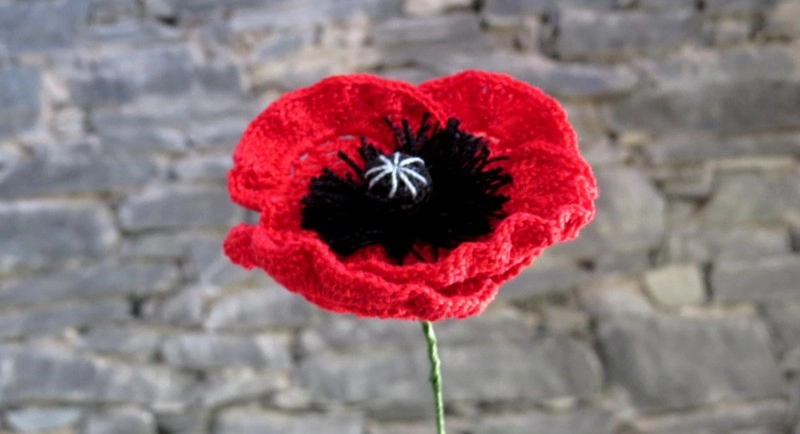
    • Aesthetic appeal: Those fiery red petals with a nearly black center make it truly arresting.
    • Versatility: There are a plethora of things for which this crochet poppy can be used, including but not limited to brooches, hats, wreaths, hairbands, and wall art.

    Materials You’ll Need

    To get started on your journey of how to crochet a poppy flower, gather the following materials:

    • Yarn: Red, black, and green (DK or worsted weight yarn works best).
    • Crochet hook: Typically 3.5mm to 4mm depending on your yarn.
    • Tapestry needle: For weaving in ends.
    • Scissors: For trimming yarn.
    • Stitch marker (optional): To keep track of rounds.

    If you’re a complete beginner, consider enrolling in a beginner crochet course to get comfortable with basic stitches before attempting this floral pattern.

    Step-by-Step Instructions: How to Crochet a Poppy Flower

    Let’s break down how to crochet a poppy flower into three parts: center, petals, and finishing.

    1. Crocheting the Center (Black)

    1. Start with a magic ring.
    2. Ch 1, make 6 sc into the ring.
    3. Pull tight and join with a sl st to the first sc. (6 sts)
    4. Round 2: 2 sc in each st around. (12 sts)
    5. Fasten off and leave a tail for sewing.

    The center represents the eye of the flower. It’s small but striking, practice this part well to add realism to your poppy.

    2. Making the Petals (Red)

    You’ll be making 4 separate petals.

    For each petal:

    1. Ch 10.
    2. Row 1: Starting from the second ch from hook, sc in next 2 ch, hdc in next 2 ch, dc in next 3 ch, tr in last 2 ch.
    3. Row 2: Ch 1, turn. tr in next 2 sts, dc in next 3 sts, hdc in next 2 sts, sc in last 2 sts.
    4. Fasten off and leave tail for attaching.

    Repeat the process four times. It is this curvature on the petals that gives a poppy its realistic flair. If you want to take the flower-making skills further, take a crochet pattern design course to design your own botanical patterns.

    3. Assembling the Poppy

    Now that you’ve got your center and petals:

    1. Lay the four petals in a circle overlapping slightly.
    2. Stitch them together at the base using the tail ends.
    3. Attach the black center in the middle using a tapestry needle.
    4. Optionally, you can crochet a green base or leaves using a simple leaf pattern (ch 6, sc, hdc, dc, hdc, sc).

    Voilà! You’ve learned how to crochet a poppy flower, a stunning, timeless creation.

    Styling Ideas for Crocheted Poppies

    Now that you’ve mastered how to crochet a poppy flower, here are a few creative uses:

    • Attach a pin back to turn it into a brooch
    • Sew onto a headband or hair clip
    • Use as an embellishment on bags or scarves
    • Make multiple for a wreath or garland

    These are just a few ideas, your creativity is the only limit.

    Tips for Realistic Results

    My Creative Butterfly is a self-taught artist who has been crocheting for over 20 years while honing her skill to produce hyper-realistic flowers and micro-miniature works that are greatly influenced by nature, especially flowers such as poppies.

    Learning from artists such as her will make one believe in the possibility concealed in every pattern and encourage that person to step a bit farther toward the unknown in designing.

    Learning More: Courses & Resources

    If you’re serious about mastering how to crochet a poppy flower, or venturing into more advanced patterns, here are some valuable learning paths:

    Whether you’re just starting or seeking to turn your passion into a profession, these resources will support you on your journey.

    Common Mistakes to Avoid When Crocheting Poppy Flowers

    While learning how to crochet a poppy flower, here are a few mistakes beginners tend to make, and how to avoid them:

    • Using the wrong hook size: Always match your yarn weight to your hook size.
    • Incorrect tension: Too tight or too loose can distort the petal shape.
    • Skipping blocking: Blocking helps shape your petals evenly.
    • Not securing tails properly: This can unravel the piece over time.

    With practice, you’ll notice these minor issues and correct them instinctively.

    Customize Your Poppy

    Part of the joy of learning how to crochet a poppy flower is the freedom to customize:

    • Use variegated yarn for a multi-tone effect
    • Add a touch of glitter yarn in the center for flair
    • Modify petal count for a fuller bloom

    Once you understand the basic construction, you’ll feel empowered to innovate.

    Why Choose Crocheted Flowers Over Real Ones?

    If you’re wondering why people go through the effort of learning how to crochet a poppy flower, here are a few solid reasons:

    • Eco-friendly: No plastic waste or short life span.
    • Everlasting: Unlike real flowers, crocheted ones don’t wilt.
    • Customizable: Adjust size, color, and style to suit your needs.
    • Therapeutic: The process of crocheting is calming and meditative.

    These benefits make crochet flowers perfect for gifts, keepsakes, and decor.

    Final Thoughts

    Learning how to crochet a poppy flower is more than just a crafting project, It is an opportunity for a person to merge creative energy with tradition and employee crafts into life’s everyday fabric. For remembrance or the mere practice of crochet, a poppy is one of the most satisfying flower designs to achieve.

    Take a cue from artists like My Creative Butterfly name that lives on as the first-ever hybrid flower designer in Canada-for she has been creating perfectly realistic flowers for more than twenty years.

    Get your hook, grab that yarn, and create your poppy blooms today.

    FAQs About How to Crochet a Poppy Flower

    How to crochet a poppy free pattern?

    If you’re looking for how to crochet a poppy flower with a free pattern, this is your first step. Basic stitches will be used: chain (ch), single crochet (sc), half-double crochet (hdc), and double crochet (dc). The simple pattern calls for one to work a black center using sc in a magic ring, then create four red petals separately that are stitched around the center. You will be able to find detailed free tutorials on prominent crochet blogs or on YouTube. This step-wise approach helps any beginner understand very easily how to crochet a poppy flower so that the end results can be used as either brooches or decorations and can also be given as gifts.

    Which is the easiest flower to crochet?

    The most basic flower to crochet is normally a simple, five-petal flower made with chains, slip stitches, and double crochets. It is ideal for those just beginning to learn the craft. Once you have grasped the basics, however, some consider it fun to learn how to crochet a poppy flower. Although not the easiest, poppies require only a few stitches and simple elements, center and petals, that with a little practice, become easy. In other words, whenever you want to advance beyond the basic flowers, learning how to crochet a poppy flower is a beautiful project to try next!

    How to draw poppy flower step by step easy?

    Step-by-step easy poppy drawing starts with the center of the flower as a little circle. Then, draw four to five large petals all overlapping, with wavy lines so that they could be described as natural or ruffled. Add a few thin, curved lines in the center, going down into the stem and leaves. Shade or color the petals bright red, and the center black. Interestingly, if you’re into crafts, learning how to crochet a poppy flower brings similar joy, translating this simple beauty into yarn form using basic crochet techniques and creativity. Try both for a fun artistic experience!

    How to crochet a simple flower for beginners step by step?

    A Member of The Simple Flower crocheters initiated this with a magic ring. Chain 1, then 5 single crochets inside the ring. Slip-stitch to join. Drawing up a loop for the petals: chain 2, 2 double crochets, chain 2, slip-stitch in next stitch, and repeat. These few stitches make for a very simple five-petal flower. From here, hopefully, one will be ready to move onto learning how to crochet a poppy flower in which petals and disk are made separately-a handsome step for beginners to take toward growing their skills.

  • How to Crochet a Forget Me Not Flower?

    How to Crochet a Forget Me Not Flower?

    Watch This Guide: How to Crochet a Beautiful Forget-Me-Not Flower

    I will never forget that first time I made a crochet forget-me-not flower; my heart smiled at what a jewel-like and fine piece it was. These little blue flowers with soft yellow centers will always hold sentimental value for me. So when I figured out how to crochet a forget me not flower, it felt like capturing a piece of nature’s poetry with my hook and yarn. In this blog, I will walk you through the process step-by-step, sharing some insights from my 20-plus years of experience crocheting realistic flowers as My Creative Butterfly.

    Why Crochet a Forget Me Not Flower?

    Let me explain the symbolism before we get into the workings of how to crochet a forget me not flower. These tiny blooms symbolize sincere love, remembrance, and bonds. A forget-me-not flower is always an appropriate choice to be made as a reminder of someone, to beautify the home with a bit of nature, or to decorate a gift.

    Self-taught, I have always found great satisfaction in interpreting the subtle beauty of nature through crocheting. I specialize in realistic crocheted flowers and micro-miniatures, with forget-me-nots being one of my favorite programs to execute for sale and teach.

    Materials You’ll Need

    To get started on how to crochet a forget me not flower, gather the following supplies:

    • Crochet hook (usually 1.25 mm – 2.5 mm for fine work)
    • Fingering or cotton thread in:
      • Sky blue (for petals)
      • Bright yellow (for center)
      • Green (for optional leaves/stems)
    • Yarn needle
    • Scissors
    • Stitch marker (optional)

    Make sure to pick a yarn with good shape retention. When it comes to realistic flowers, I go for tightly spun cotton threads because they give clean stitch definition-which is essential when making something this detailed.

    Step-by-Step Guide: How to Crochet a Forget Me Not Flower

    Now, let’s get into how to crochet a forget me not flower, step by step:

    Step 1: Start with a Magic Ring

    Using yellow thread:

    • Make a magic ring.
    • Crochet 5 single crochets into the ring.
    • Pull the ring tight and slip stitch into the first stitch to close the round.

    This forms the yellow center of the flower.

    Step 2: Create the Petals

    Switch to blue yarn:

    • In the first stitch: chain 2, 2 double crochets, chain 2, slip stitch into the same stitch.
    • Repeat this pattern in all five stitches to form five petals.

    Now your forget-me-not flower will start to take shape. This is one of my favorite moments when the flat center suddenly blossoms with texture and form.

    Step 3: Weave In Ends

    The loose ends should be woven in neatly with a yarn needle at the back of the flower.

    You can optionally attach the flower to a wire stem, or crochet a couple of leaves in green to complete the look.

    And just like that, you’ve learned how to crochet a forget me not flower with grace and simplicity.

    Tips for Crocheting Realistic Flowers

    As My Creative Butterfly, my goal has always been to bring nature’s detail into my yarn work. When learning how to crochet a forget me not flower, a few small touches can elevate your flower from basic to botanical:

    • Use a slightly smaller hook than recommended to keep stitches tight.
    • Block your finished flower gently for a clean finish.
    • Mix color tones if you want depth, like a hint of white in the blue petals.
    • Use embroidery thread for ultra-miniature versions.

    These techniques are covered in detail in many crochet courses online, especially those that focus on nature-inspired designs.

    For Beginners: Keep It Simple

    If you’re wondering how to crochet a forget me not flower as a beginner, don’t worry- it’s really a good place to start! Just four basic stitches are used in the flower: single crochet, double crochet, chain, and slip stitch. These are often introduced in a good beginner crochet course and form the foundation for all floral designs.

    Doing small projects like these will instill in you the confidence to go on to more complex designs. It will also teach you to be precise and exact with your stitches, something very important when working on micro-miniatures.

    Once You’re Ready: Make It Advanced

    As your skills improve, take your forget-me-nots to the next level:

    • Crochet multiple blooms and join them into a stem.
    • Add calyxes, leaves, and shaping wire.
    • Experiment with thread painting for added realism.

    The advanced techniques are usually taught in an advanced crochet course, where you can polish your skills and even learn professional finishing techniques. Trust me when I say that once you see your forget-me-nots set in a tiny vase, you will know how deeply fulfilling it is to work with detail.

    Designing Your Own Forget Me Not Variations

    Once you’ve mastered the basic method of how to crochet a forget me not flower, it’s time to experiment with your own variations. You could:

    • Change the size of the petals by adjusting the stitch count.
    • Make a multi-layered bloom by stacking several flowers.
    • Incorporate them into brooches, hair accessories, bookmarks, or even wearable art.

    This is where a crochet pattern design course can be extremely valuable. It teaches you how to think creatively about structure, repetition, and form, turning your ideas into custom patterns.

    Writing and Sharing Your Pattern

    If you have successfully made the flower on your own on your own version, it will have to be shared with others through the writing of a pattern, which will be your next step. The crochet pattern writing course shall assist you in constructing your pattern in an easy-to-understand format, allowing other crocheters to crochet with ease.

    Pattern writing also enhances your understanding of how to crochet a forget me not flower by making you rethink each stitch, placement, and transition.

    Why Forget Me Not Flowers Are Perfect for Learning

    From my experience guiding others, I’ve found that learning crochet for beginners is a little more exciting when something beautiful comes out at the other end. These forget-me-nots are quick to make, they teach you flower construction, and they end with something you will take pride in.

    As a matter of fact, these flower samples aid beginners in recognizing repeated stitch sequences in pattern designs, hence highlighting formation. A good and gratifying way for beginners to apply the lessons learnt.

    Stitch Knowledge is Key

    When learning how to crochet a forget me not flower, knowing your basic stitches really matters. That’s why investing time to learn crochet stitches, like single, double, and chain, is crucial before diving into more complex botanical patterns.

    Once you get this down, crocheting flowers will be easy and fun.

    Practice with Miniature Patterns

    Going even further in technique, an expert might choose to crochet ever smaller forget-me-nots with finer thread. I often use size 8 or 10 cotton thread with a 0.6 mm hook to make my micro-miniatures. Such fineness can prove a challenge, albeit an accomplishment worth attaining.

    Crocheting at this scale is a great next step for those who want to learn to crochet with a goal of mastering flower work or replicating nature in thread form.

    My Creative Butterfly: The Inspiration Behind the Thread

    As My Creative Butterfly, every flower I crochet has a story. I’m a self-taught artist; I have been crocheting for about 20 years, mainly focusing on lifelike flowers and delicate micro-miniatures. My main source of inspiration is the observation of real flowers-how they curve, layer, and play with light.

    Forget-me-nots have an important place in my work because they stand for memory and connection, things we pass on when we teach or gift a handmade flower. So if you’re wondering how to crochet a forget me not flower, know that you’re also learning to preserve something truly meaningful in thread.

    Final Thoughts: The Joy of Botanical Crochet

    Learning how to crochet a forget me not flower may seem like a small project, yet it opens avenues of creativity forevermore. From working on one’s own technique all the way to pattern designing, this little flower is a gateway to so much more.

    Then, and this is paramount, the little flower tells us that even the tiniest stitch can mean world so much. So go ahead: get your hook ready, pick out your favorite blues and yellows in yarn, and watch that creativity bloom-petal by petal.

    FAQs

    How difficult is it to crochet flowers?

    I started crocheting flowers with the thought that they must be complicated; I soon started learning the simpler, harder way. One of the easiest and most rewarding patterns is learning how to crochet a forget me not flower. With basic stitches like chain, single crochet, and double crochet, you can make a neat little fragile bloom in less than half an hour. Choosing the right yarn and hook size and being mindful of shaping the petals are the real keys. If you have mastered beginner-level stitches, you will find how to crochet a forget me not flower surprisingly easy and very satisfying.

    How long does it take for a forget me not flower to grow?

    In nature, the growth of the forget-me-not flower, from seed to bloom, takes several weeks. Fast enough for you to give it life in less than an hour with a crochet hook and some yarn. I was quite fascinated when I first learned how to crochet a forget me not flower; they come together so quickly. Just a few stitches, chains, double crochets, and slip stitches, and a single flower can be completed within 20 to 30 minutes. Isn’t that the beauty of knowing how to crochet a forget me not flower? Instant gratification and a handmade tribute to nature’s graceful charm.

    How to crochet without missing stitches?

    I once forgot some stitches, especially those tiny petals, while learning how to crochet a forget me not flower. The biggest challenge of being able to crochet without missing stitches is following the count carefully and using stitch markers, particularly for smaller or circular pieces. I always recommend hitting pause after each round and counting your stitches again. It will not only cement your accuracy but also boost your confidence as you go along. When learning how to crochet a forget me not flower, one has to focus on stitch placement because even one missed stitch affects the symmetry and final look of the flower. Practice makes perfect!

  • How to Choose the Right Yarn for a Crochet Project?

    How to Choose the Right Yarn for a Crochet Project?

    Watch This Guide: How to Choose the Best Yarn for Crochet

    More than two decades ago, when I first began crocheting, I hadn’t the faintest idea that yarn choice could make or break a project. I recall beginning a flower pattern with some fuzzy novelty yarn that I thought was awesome, yet in the end, I was frustrated because I just could not see my stitches. Then I understood how to choose the right yarn for a crochet project. Over time, I came to realize that the yarn is not the mere medium; it is the foundation of your crochet story. And this blog will cover everything you need to know about making that choice confidently.

    1. Understand Your Crochet Project Goals

    Before diving into a sea of colors and textures, ask yourself: what am I making?

    • Is it a wearable like a sweater or shawl?
    • A home décor item like a pillow or throw?
    • A micro-miniature or a realistic flower, like the ones I make under my label My Creative Butterfly, where most of my creations are inspired by nature?

    Each type of project demands different characteristics in yarn. For example, soft, washable cotton or blends are great for wearables, whereas strong acrylics may be more suited to amigurumi or home decor.

    So, the very first step in learning how to choose the right yarn for a crochet project is knowing the end use of the project.

    2. Match Yarn Weight to Your Pattern

    Yarn comes in weights ranging from lace (super fine) to jumbo (very bulky). Using the wrong weight can change the entire outcome of your project.

    • Lightweight yarns (lace, fingering) are ideal for delicate shawls or doilies.
    • Medium weights (DK, worsted) are versatile for scarves, sweaters, and blankets.
    • Bulky or super bulky yarns work great for chunky throws or quick winter hats.

    Keep the exact yarn weight the pattern calls for. If you want to play with different yarn weights while conceiving your design (and are really thinking of entering into the crochet pattern design course), fabulous projects have resulted from such experiments; but swatch first!

    3. Fiber Content Matters

    One of the most crucial factors in deciding how to choose the right yarn for a crochet project is the fiber type. Each fiber behaves differently.

    • Cotton is breathable, strong, and perfect for summer wearables and dishcloths.
    • Acrylic is budget-friendly and great for beginners or gift items.
    • Wool is warm and stretchy, excellent for winter garments.
    • Bamboo and silk blends offer luxurious drape and sheen, ideal for lacy items.

    Choosing the wrong fiber might result in an itchy scarf or a saggy bag. When you’re just starting to learn to crochet, understanding these subtle differences is a game-changer.

    4. Texture: Smooth or Fancy?

    This is one of my most favorite spaces, in which I would say that I am quite partial to yarns that emulate the natural world, soft petals, mossy greens, that kind of way. One tough lesson I’ve learned over the years is that textural yarns like boucle, eyelash, or heavily speckled varieties conceal the stitches.

    In the process of learning skills, like, let’s say one is attending a beginner crochet course, choose smooth and light-colored yarn. So, the whole stitch is clearly visible, avoiding any kind of frustration.

    Once confidence has been built, say after an advanced crochet course, having fun with a combination of textures that add an interesting dimension to the work is well worth consideration.

    5. Color Selection with Purpose

    Color isn’t just about aesthetics, it affects usability and visibility.

    • Light colors are great for practice because they show your stitches.
    • Dark or variegated yarns might look stunning but are tricky to work with, especially when you’re still learning crochet for beginners.

    When designing flowers under My Creative Butterfly, I often use gradients and subtle tonal changes to mimic the realism found in nature. But for structural or patterned items, solids or heathers offer a more uniform look.

    6. Gauge and Swatching—Don’t Skip It!

    Whether you are a person newly initiated in crochet or are thinking to learning more learn crochet patterns, one thing is true: swatch and do it early to save time and frustration. 

    The check on whether the pattern’s gauge matches with the one that you measured ensures that the finished piece will fit well on the wearer and will drape nicely as expected. Otherwise, you might find yourself forced to trial combining all other hook sizes or even labor over choosing a different yarn. 

    Knowing the process is especially crucial for those engaged in a crochet pattern writing course material and/or working toward having their own patterns published.

    7. Project Durability and Care

    Not all yarns are created equal in terms of washability. Think about how often the item will be used and washed.

    • Baby items or kitchen accessories should be machine-washable.
    • Decor pieces can often be more delicate and hand-washed.

    When deciding how to choose the right yarn for a crochet project, don’t forget to check the care instructions. You don’t want your detailed crochet flower to shrink after the first rinse!

    8. Budget and Availability

    Being honest here, yarn can be an expensive thing at times. While I always suggest learning quality over quantity, depending upon one’s current circumstances, anything affordable, worthy of the lesson itself, can suffice. The moment you achieve some progress with your work, buying good materials would make sense.

    In reality, some great deals I have come across are from local yarn stores or during online sales.  And if you’re taking crochet courses online, many platforms suggest economical yet good-quality yarns suitable for your level.

    9. Consider Your Skill Level

    If you’re still getting the hang of basic stitches and trying to learn crochet stitches, then stick to yarns that won’t make your work harder. Choose:

    • Worsted weight yarns
    • Light solid colors
    • Smooth textures

    Once you master the fundamentals, you’ll have the freedom to experiment with laceweights, mohair, or hand-dyed luxury yarns.

    10. Inspired by Nature: My Creative Butterfly

    For those who have followed my journey with My Creative Butterfly, you would know my yarn choices are really inspired by nature. Whether I am creating a crochet rose or a 2cm miniature daisy, the yarn has to mimic not only the colors but also the touch and movement of real petals.

    Being an autodidact, all I have learned has been by way of experience, trial, error, and love for the matter. The joy in how to choose the right yarn for a crochet project lies in the fact that intentional decisions go into breathing life into your ideas.

    And when you start seeing yarn as something more than just a material—a storyteller—you will start making magic too.

    11. Yarn Substitution Tips

    Ever fall in love with a pattern only to realize the suggested yarn is discontinued? Here’s what to consider:

    • Match the weight
    • Match the fiber (or use a blend with similar drape)
    • Check yardage and gauge
    • Read reviews about how the yarn behaves

    Tools like yarnsub.com can help, but nothing beats testing it yourself. Knowing how to choose the right yarn for a crochet project becomes even more empowering when you can confidently make substitutions that work.

    12. Learn from Every Project

    Every finished piece is its own lesson, whether it’s good or bad. Maybe the wool was too stretchy, or it would pill fast. Reflecting on these experiences really builds up one’s yarn intuition.

    If you’re looking to explore deeper into crochet and possibly embark on a structured learning crochet for beginners program or perhaps a crochet pattern design course, then keep a yarn journal. Record how the yarn behaved, what it best combined with, and what would be different for next time.

    13. Choosing Yarn for Specific Stitch Work

    Some stitches look better with certain yarns. For example:

    • Lace stitches shine in thin, silky yarns.
    • Post stitches and cables pop in tightly spun yarns.
    • Textured stitches need a yarn that doesn’t obscure detail.

    If your goal is to learn crochet patterns and make them stand out, choose yarns that highlight, not hide your technique.

    Final Thoughts: Yarn as a Creative Partner

    In all my years of crocheting, yarn has been more than a tool, it’s been a companion, a challenge, and a muse. To the best of my abilities, wherever I am making a flower that resembles the real thing or a comfy blanket or I am helping out in a workshop, I’ve come to understand that knowing how to choose the right yarn for a crochet project is an evolving art.

    So, when you next reach for a skein of yarn, pause and remember to touch it one time. Feel it. Imagine how it would flow with your project. Make a swatch and listen to it call out to you.

    And remember: The best yarn is not necessarily the most expensive; it is really the yarn that best brings your ideas to life.

    FAQs

    How to pick the right yarn for crochet?

    When I first started crocheting, I was not really sure about the effect that yarn performance could have on a project until that very first flower project was ruined by a fuzzy yarn. My further ramblings in the craft taught me how to choose the right yarn for a crochet project by weight, fiber, texture, and color. For beginners, smooth, medium-weight yarn in a light color is most suitable. Good choices would be cotton or blends for wearables and acrylic for home décor. Always consider the nature of the project and how it should be washed. The more you know about how to choose the right yarn for a crochet project, the better your outcomes will be.

    How to pick the right yarn for your project?

    When I began crocheting, I used to randomly pick yarn based on color. Major mistake. With time, I learned how to choose the right yarn for a crochet project by assessing yarn weight, fiber content, and texture. For instance, I now use soft cotton for flowers, whereas wool blends go for warm accessories. When you select yarn in accordance with the project, it will maintain shape, have the correct feel, and last well. Whether you’re making a cozy scarf or a delicate doily, understanding how to choose the right yarn for a crochet project makes all the difference in the final outcome.

    How to calculate yarn needed for a crochet project?

    Before I begin on a new design, a very important step is to figure out how much yarn I am going to need. The best way to calculate this is by knitting a sample of the given stitch and yarn. Then measure how much yarn is taken by the sample and calculate accordingly for the full-size project. It is always good to include about 10-15% extra in the yardage. Besides measurement, this method will also reinforce how to choose the right yarn for a crochet project, as different yarn weights and stitch styles will influence how much yarn one will use. Proper planning will ensure that you never run out of yarn midway through the pattern.

  • How to Make a Crochet Pattern Bigger?

    How to Make a Crochet Pattern Bigger?

    If you’ve ever found the perfect crochet pattern just to realize it was a little off in size for you, then, lady, you just belong in my tribe. Whether you’re creating a cozy blanket, a stylish garment, or a beautiful doily, learning how to make a crochet pattern bigger is an essential skill every crocheter should master.. This complete guide showcases how to resize your patterns, never letting designs down in the process.

    At My Creative Butterfly, we understand how frustrating it can be when the pattern you’ve fallen in love with doesn’t quite match your needs. That’s why we’ve gathered our years of experience over 20 years of crocheting with inspiration from nature and a focus on realistic flowers and micro-miniatures to help you master the art of resizing.

    Why Resize a Crochet Pattern?

    There are several reasons why someone might want to learn how to make a crochet pattern bigger:

    • The item is intended for someone taller, larger, or with specific measurements.
    • The final project needs to match home décor proportions.
    • You want to use thicker yarn for a quicker finish.
    • You’re looking to repurpose a design into something new.

    No matter your reason, learning how to make a crochet pattern bigger will open up endless creative possibilities.

    1. Use a Larger Hook and Thicker Yarn

    The easiest way to change the size of a crochet pattern is by changing the size of the hook and yarn. With a bigger hook and thicker yarn, the samples become naturally bigger in size. Then a swatch has to be made to measure the exact change in size that will occur.

    At My Creative Butterfly, we always advise people to try out different yarn and hook combinations before diving into their whole project. It actually can be a really fun creative process!

    Tip: Keep in mind that increasing hook and yarn size may affect the drape and structure of your project.

    2. Add Extra Stitches or Rows

    Another technique for mastering how to make a crochet pattern bigger is by adding additional stitches or rows. It is a simple and effective way for expanding of flat things such as blankets or scarves.

    For example, if the pattern repeat for the blanket is 6 stitches, you can add more multiples of 6 to increase the width. 

    Extra rows of stitches could require you to make some modifications to the pattern to keep the work symmetrical and aligned. However, if you’re not sure where to start, joining a crochet pattern design course may increase your confidence.

    3. Adjust the Gauge

    Gauge plays a significant role in pattern size. If your gauge differs from the original, your entire project could end up smaller or larger.

    To increase the size, try to achieve a looser gauge by:

    • Using a larger hook
    • Choosing yarn with more loft
    • Working with more relaxed tension

    By adjusting your gauge intentionally, you can learn how to make a crochet pattern bigger without rewriting the whole thing.

    4. Add Motifs or Repeats

    If your work is something motif-based like a granny square blanket or mandala, you can simply add more motifs or pattern repeats to expand the piece; this becomes pretty helpful when transforming a smaller design into a full-size project.

    My Creative Butterfly recommends maintaining balance in motif placement to achieve a harmonious finish.

    5. Modify the Pattern Instructions

    This method requires a bit more experience but is ideal for those who are familiar with crochet mathematics. You’ll need to:

    • Identify the stitch repeat pattern
    • Multiply the stitch counts proportionally
    • Maintain the shaping and design integrity

    If this sounds complex, taking a crochet pattern writing course can equip you with the skills to modify patterns confidently.

    6. Use a Different Yarn Weight

    Switching to a bulkier yarn can enlarge the final piece significantly. This technique often works best for items like scarves, shawls, and afghans, but be cautious with garments, as the drape and stretch may change considerably.

    Remember: Always make a swatch and calculate the new dimensions before beginning a large project.

    My Creative Butterfly frequently uses yarn experimentation to craft nature-inspired flower arrangements that can be scaled for different display sizes.

    7. Rescale Charts and Graphs

    Charts or diagrams may be resized digitally or by hand and then the stitch count can be adjusted accordingly. This method is an excellent way to learn how to make a crochet pattern bigger, especially when working on graphghan or tapestry crochet projects.

    8. Combine Techniques for the Best Results

    Usually, the best way to resize a pattern is to implement several of the above methods. For instance, use a bigger hook and keep adding rows. The more you try different techniques, the more you will understand how your alterations will manifest themselves in the finished piece.

    When teaching, we recommend trying a combination of two or more strategies to determine which works best for your particular project at My Creative Butterfly.

    Helpful Tools for Resizing

    To truly understand how to make a crochet pattern bigger, you’ll want to use these tools:

    • Gauge swatch: A must-have for accurate calculations
    • Measuring tape: To ensure your project stays on track
    • Graph paper or design software: Great for visualizing custom sizes

    Mistakes to Avoid When Resizing

    1. Skipping the swatch – Always test your new size before you dive in.
    2. Ignoring yarn characteristics – Fiber type, twist, and loft all affect the finished size.
    3. Forgetting to adjust shaping – If you’re making garments, shaping must also be resized proportionally.
    4. Lack of planning – Take notes and calculations seriously to prevent mid-project surprises.

    Build Your Confidence with Courses

    If you’re feeling overwhelmed by resizing, don’t worry. You can learn to crochet or refine your skills with a variety of online resources. Start by taking a beginner crochet course, then take an advanced crochet course as your confidence builds. Once confident in your skills, you can explore designing and professional pattern writing via crochet courses online for customization.

    Mini-courses and tutorials on My Creative Butterfly are regularly updated for students interested in learning nature crochet designs, including resizing of patterns to serve different purposes.

    Real-World Example from My Creative Butterfly

    Let’s say you’ve found a small flower motif and you want to turn it into a full-size table runner. At My Creative Butterfly, we would:

    1. Increase the hook size slightly.
    2. Use a heavier weight thread or yarn.
    3. Add additional motifs in a repeating sequence.
    4. Measure carefully and adjust the number of repeats to match the desired size.

    This approach keeps the delicate nature-inspired look while giving the piece more impact in its new form.

    Stay Inspired: Practice Makes Progress

    Resizing a pattern is not just technical; it forms a big part of the crochet art.  When you learn how to make a crochet pattern bigger, what you are really learning is how to adapt, improvise, and inject your own creative vision into the project.

    Practice with smaller projects. Go ahead and get experimental with different fiber types, hook sizes, and motives. Try to keep this thought in mind: the more you do, the easier it will become to think about resizing.

    If you are just starting now, check out our learning crochet for beginners resources and learn crochet stitches tutorials for you to start with. The natural next step will be learning how to learn crochet patterns and design. That is when resizing will become second-nature.

    At My Creative Butterfly, we’re here to guide you every step of the way.

    Final Thoughts

    Understanding how to make a crochet pattern bigger has just about disappeared from the mainstream technical knowledge. Consider this your opportunity to customize projects to your liking and turn these into happy moments in your crafting life.

    Expanding a motif, going through a few size changes on a garment, or just expanding that tiny doily to a big tablecloth: all that is possible to do once you know how to manipulate the patterns. With time, practice, patience, and the support of the My Creative Butterfly community, resizing will soon become second nature to you.

    Create with freedom, trust yourself, and watch all your projects blossom gorgeously, much like the nature-inspired designs that serve as our muse here at My Creative Butterfly.

    FAQs

    Can you multiply a crochet pattern to make it bigger?

    Crochet pattern vintage scale with multiplication, especially when a repeat stitch pattern is in. This means knowing the stitch repeat (let’s say multiples of 6) and increasing the number of stitch repeats in the row or round to scale the entire project. This technique will be the most sought-after for projects like blankets or scarves or anything else that is best for modular design. Hence, if you have ever wondered how to make a crochet pattern bigger, the easiest and most common answer is to multiply the stitch count. Remember to also increase your foundation chain accordingly and keep the balance and proportion so that the design does not lose its own form and symmetry.

    How to make a crochet stitch bigger?

    The bigger the crochet stitch, the bigger the hook size or yarn. All these potentialities inherently enlarge the commendable being of their own. On the other hand, lowering tensions when crocheting tend to give more room to those stitches. When you are in your early stages in learning how to make a crochet pattern bigger, altering the stitch size is a quick way of doing it. However, do remember that this might change the drape and look of your project. Hence, always make a gauge swatch first, measure out the difference, and make sure whichever alteration you are choosing to go with will not in any way distort either the design or the proportion of the original pattern.

    How do I enlarge a crochet pattern?

    Making a crochet stitch larger just means to go for an increased hook size or thicker yarn that makes each stitch naturally bigger. Loose tension may also build up large individual stitches. Learning how to make a crochet pattern bigger encompasses the very easy option of size modification of the stitches. But always beware that by enlarging a stitch, you might compromise the way a piece drapes and looks; then always conduct a gauge swatch, do the measuring, and be certain the size difference is not going to distort the entire design and proportion of the original pattern.

  • How to Increase the Size of a Crochet Pattern?

    How to Increase the Size of a Crochet Pattern?

    Sometimes you become enamored with a particular crochet pattern, and then it simply does not cater to your needs of size. You want to make a baby blanket into a throw, or size up the hat for an adult. An important skill is knowing how to increase the size of a crochet pattern. In short, a crochet design can be made larger by using a bigger hook, thicker yarn, extra stitches and some adjustments to the stitch count, all the while preserving the symmetry and original shape of the design.

    At My Creative Butterfly, we have equipped thousands of crafters to work through their crochet projects, wherein resizing does not ruin the integrity of the original design.

    Why Would You Want to Resize a Crochet Pattern?

    Knowing how to increase the size of a crochet pattern isn’t just about aesthetics, it’s also about function. You might want to resize:

    • A baby blanket into a larger afghan
    • A cropped cardigan into a full-length sweater
    • A fitted hat for a larger head circumference
    • A table runner to fit a different surface

    At My Creative Butterfly, we regularly see makers tweak floral doilies or nature-themed squares to suit specific home décor or personal style. With Natasha’s background in designing realistic flowers and micro-miniatures, resizing has become an art in itself.

    Option 1: Change Yarn Weight and Hook Size

    One of the easiest ways to increase a pattern’s size is to switch to a thicker yarn and a larger hook.

    • Example: Switching from sport weight yarn to bulky yarn will naturally increase the dimensions of your project.
    • Important: Swatch first to measure the new gauge and determine how much bigger your final piece will be.

    This method is ideal if you’re still learning crochet for beginners, because it doesn’t require altering the pattern’s math. However, it does change the texture, so it’s not always the best option for wearables.

    Many of our students at My Creative Butterfly in the beginner crochet course try this method first, especially for scarves, blankets, and shawls.

    Option 2: Add Repeats or Rows

    If your pattern has a clear repeat like a set of 4 or 8 stitches, you can increase its size by adding extra repeats.

    For Rows:

    Add more rows to make your project taller.

    For Stitches:

    Increase the number of stitch repeats in each row to make it wider.

    Understanding the math behind this method is taught in our crochet pattern design course, where students learn how to increase the size of a crochet pattern while keeping proportions and symmetry intact.

    Option 3: Adjusting the Gauge

    Changing the gauge (i.e., the number of stitches per inch) can drastically affect size.

    1. Make a swatch with your chosen yarn and hook.
    2. Measure your stitches and rows per inch.
    3. Multiply that by the stitch counts in your pattern to estimate the finished size.

    This method is often used in our advanced crochet course, especially for garments that require precise sizing. At My Creative Butterfly, we guide creators through this math gently, ensuring accuracy without stress.

    Option 4: Modify the Pattern Mathematically

    If you’re comfortable with numbers, you can go deeper by rewriting parts of the pattern. This involves:

    • Scaling motifs proportionally
    • Recalculating stitch increases and decreases
    • Adjusting shaping and tapering sections

    You’ll need a good understanding of stitch anatomy and construction. This is why we encourage more experienced students in our crochet pattern writing course to learn how to increase the size of a crochet pattern with confidence, using actual mathematical adjustments.

    Option 5: Add a Border or Edging

    Sometimes the pattern is perfect as-is, but it just needs a bit more size. That’s where borders come in.

    • Add simple rows of single or double crochet.
    • Try shell or picot borders for a decorative finish.
    • Combine different border styles for added width and height.

    This technique is commonly used at My Creative Butterfly, especially when resizing our signature nature-inspired motifs into larger statement pieces.

    How to Increase the Size of a Crochet Pattern Without Distorting It

    The biggest challenge is maintaining balance and design clarity. Here’s how to do it right:

    1. Understand the pattern repeat.
    2. Maintain stitch ratios, especially in shaping sections.
    3. Keep tension consistent throughout.
    4. Swatch and measure before committing to the full size.

    At My Creative Butterfly, we teach these principles visually and practically, ensuring that when you size up, the beauty of your piece is preserved.

    My Creative Butterfly: Helping You Resize With Confidence

    My Creative Butterfly celebrates everything creative and patient, with an emphasis on floral inspiration. Natasha, a self-taught crochet artist with more than 20 years of experience, is known for creating crocheted realistic flowers and micro-miniatures with a good sense of balance between aesthetics and structure.

    Small or very big (full afghan), thousands of crafters have been coached by us to learn how to increase the size of a crochet pattern fearlessly. Our customized assistance will ensure that your project is fitted well and looks stunning. 

    We frequently hear from our students: “Before, I was afraid to tweak a pattern, but now it feels like I own it.” That is The My Creative Butterfly effect.

    When Should You Not Resize a Pattern?

    Sometimes it’s better not to adjust size, especially when:

    • The design is extremely intricate (like mandalas or filet crochet).
    • Resizing could distort a picture or motif.
    • The pattern involves precise shaping, like socks or gloves.

    If you’re unsure, you can always reach out to our team at My Creative Butterfly for feedback. We also offer exclusive guidance in our crochet courses online to help you determine when resizing is a good idea, and when it might not be.

    Tools and Tips for Accurate Sizing

    To succeed in increasing the size of a crochet pattern, you’ll need a few helpful tools:

    • Measuring tape
    • Calculator or stitch count chart
    • Graph paper for visual planning
    • Digital apps like Stitch Fiddle for scaling motifs

    We introduce these tools in our learn to crochet and learn crochet stitches modules. At My Creative Butterfly, we combine modern tools with traditional techniques to make resizing accessible to every level of crocheter.

    Common Mistakes When Resizing Crochet Patterns

    As you explore how to increase the size of a crochet pattern, avoid these common pitfalls:

    • Ignoring gauge changes
    • Forgetting to swatch
    • Over-complicating simple patterns
    • Not tracking stitch count as you go

    That’s why we stress swatching and planning in our learning crochet for beginners program. Whether you’re altering a scarf or an entire sweater, small miscalculations can lead to big surprises!

    Real Example from My Creative Butterfly

    Our most popular floral wall hanging was originally a 12×12-inch square. A student wanted it for use as a baby blanket in the larger form. The scale of the original design was changed to 36 inches square with thicker yarn, more repeats, and a careful blocking treatment: the flower detail did not suffer at all.

    This is the heart of My Creative Butterfly: helping you grow and transform your creativity, one thoughtful adjustment at a time.

    Final Thoughts: Resizing Is an Art and a Skill

    Learning how to increase the size of a crochet pattern may seem intimidating at first, but it can become a superpower with a little math and an encouraging group to back you. Depending on whether the alterations are in terms of fit, function, or fun, resizing really allows you to customize each and every project.

    At My Creative Butterfly, we feel crochet is a living art rather than just a craft. With Natasha’s keen direction and nature-conscious outlook, we are here to help you create, adapt, and grow in confidence.

    FAQs

    How do you upsize a crochet pattern?

    Depending on the subject, a few methods can be implemented to increase the size of a crochet project. Increasing the tool size, working with heavier yarn, adding more stitch repeats, or increasing rows are some options of resizing. All these affect the size, the drape, and of course, ultimately, the fit; thus, it is best to swatch and take measurements first. Learn how to increase the size of a crochet pattern to make sure the finished article fits your needs, without losing its form and clarity of design. This skill will help you enlarge a blanket or resize a garment and enable you to confidently and accurately customize any project.

    Can I double a crochet pattern to make it bigger?

    Yes, you can double a crochet pattern and thereby enlarge it; however, this should be done with a keen sense for the pattern. Simply doubling all stitch counts may result in distortion of the design. Instead, work an increase in proportion by adding stitch repeats, enlarging the hooks, or using thicker yarn. Measure your gauge carefully and adjust rows and stitches on an even basis. If motifs are involved in the pattern, double the number of motifs rather than their sizes. Indeed, mastering the process of how to increase the size of a crochet pattern indicates that you comprehend the pattern’s structure, so that any adjustment made is proportionate and balanced. Proper planning allows for doubling confidently without hurting the final appearance.

    Does blocking crochet make it bigger?

    More so than with any synthetic yarn, blocking crochet can slightly enlarge a product. In blocking, the fabric is stretched and shaped to add extra length or width. It’s not like changing the stitch count for thereby increasing the size of an object, but it does represent a finishing technique that could be developed if, in a slight way, you want to increase the size of the pattern you are working on. It is also very helpful for smoothing uneven stitches, for shaping lacework, or for working toward very exact dimensions. But keep in mind that how much a piece will increase depends on the type of yarn and the blocking method, so always test it out on a swatch first.

  • How to Crochet a Graphghan?

    How to Crochet a Graphghan?

    Has a crochet blanket ever passed before your eyes, showing a beautiful image of a character, logo, or some intricate design, and you thought to yourself, How did they do that? That’s a graphghan: graph plus afghan. If you might want to know how to crochet a graphghan, all one needs to follow are color-coded charts (graphs) and a little specialized crochet to change yarn colors as one crochets along, embedding an image or pattern in the crochet itself. It might sound complicated at the onset, but really, with the right skill set and a little practice with the right method, there is no way you could stop.

    What Is a Graphghan?

    A graphghan is a type of crochet project wherein an image along a chart is transformed into a blanket employing colorwork techniques such as single crochet, corner-to-corner (C2C), or Tunisian crochet. In case you are wondering how to crochet a graphghan, you will need to begin with a visual pattern, often a pixelated image or a graph paper chart, which you go across row by row, changing yarn color as dictated by the design.

    Here at My Creative Butterfly, we’ve been fortunate enough to train all sorts of individuals on methods for executing graphghans for their favorite photos, cartoon characters, or original art. It is rewarding to do and makes the blanket into a truly unique piece.

    Choosing a Design: The First Step in How to Crochet a Graphghan

    Essential before you even start the hooks is deciding on the right pattern. Look for very clearly defined pixel-friendly images that do not have too many minute details. Simpler pictures work best for beginners (silhouettes, for example, or bold icons).

    If you attend a beginner crochet course, it would be better to start with a small graphghan square instead of trying a full-size blanket. We at My Creative Butterfly frequently translate flower illustrations into graphghan designs; our floral creations carry the very same nature-inspired beauty upon which our brand stands.

    Creating or Finding a Graph Pattern

    Understanding how to crochet a graphghan involves learning how to read a graph pattern. These graphs are usually made up of colored squares representing each stitch. You can:

    • Download ready-made graph patterns from crochet websites or books.
    • Use online tools like Stitch Fiddle to convert images into graphs.
    • Draw your own on graph paper using colored pencils.

    In our crochet pattern design course, we teach how to create graph-based designs for customized graphghans, combining creativity with technical skills. If you want to make a one-of-a-kind gift or heirloom, this is a powerful skill to master.

    What Supplies Do You Need?

    Here’s what you’ll need to start your graphghan journey:

    • Yarn in various colors (based on your design)
    • Crochet hook (often G/6 or H/8)
    • Yarn bobbins (to keep different colors organized)
    • Graph pattern or chart
    • Scissors, tapestry needle, and stitch markers

    At My Creative Butterfly, we always recommend using high-quality yarns with minimal fuzz, so the image comes out clear and crisp. Yarn selection plays a big part in the overall impact of your finished piece.

    Techniques for Graphghans

    1. Single Crochet (SC) Method

    This is the most common method for beginners learning how to crochet a graphghan. You simply follow the graph, working one single crochet per square, changing colors as indicated.

    2. Corner-to-Corner (C2C)

    Instead of working in straight rows, C2C is worked diagonally from one corner to the opposite. Each colored pixel becomes a block of three double crochets. This method adds texture and drape, but requires careful counting.

    3. Tunisian Crochet

    Tunisian is perfect for photo-realistic graphghans because it forms a tighter fabric with less color bleed. It’s a bit more advanced, but incredibly rewarding.

    We walk through all three of these techniques in our advanced crochet course at My Creative Butterfly, helping students decide which is best for their specific project and comfort level.

    How to Manage Yarn Changes

    One of the biggest learning curves in how to crochet a graphghan is color changes. Here are a few tips:

    • Use yarn bobbins for each color section to avoid tangles.
    • Carry yarn across short distances (if the same color is reused soon).
    • Use the tapestry technique to hide yarn tails inside stitches.

    These techniques are refined through experience. In our crochet courses online, we provide video tutorials and community support for navigating these challenges, especially when multiple colors are involved in a single row.

    How to Read the Graph

    Understanding the graph is key to knowing how to crochet a graphghan effectively:

    • If you’re right-handed, read odd rows from right to left, and even rows from left to right.
    • Each square equals one stitch (usually single crochet).
    • Color symbols or legends guide you on when to switch yarns.

    If you’re just starting out and still learning crochet for beginners, begin with a simple chart, maybe 20×20 squares, before scaling up to more intricate designs.

    Helpful Tools for Graphghan Success

    You don’t need a fancy setup, but these tools help:

    • Highlighters or washi tape to mark your place on the chart
    • Row counters to track progress
    • Tablet apps (like Knit Companion) for digital pattern tracking

    These are small things, but they make a big difference. At My Creative Butterfly, we always encourage our students to work smarter, not harder, especially when tackling larger projects like graphghans.

    Blocking and Finishing

    Once your graphghan is complete, you’ll want to block it to smooth the edges and even out the stitches. Blocking helps set the shape, especially if you’re piecing together multiple squares.

    Just like we teach in our blog on how to block a crochet hat, you can use steam or wet blocking to get professional-looking results. It’s a satisfying final touch after weeks (or months) of dedicated work.

    Tips to Stay Motivated

    Graphghans are beautiful but time-consuming. Here are ways to stay inspired:

    • Break the project into sections.
    • Celebrate each completed row or image.
    • Share your progress online or in crochet communities.

    Many of our learn to crochet students say completing their first graphghan was one of the most fulfilling experiences in their crafting journey. The feeling of watching your design appear stitch by stitch is hard to beat!

    Why Makers Around the World Trust My Creative Butterfly

    At My Creative Butterfly, yarn craft is and always will be part of our very existence. Our founder, Natasha, is an autodidact artist with 20-plus years of crochet adventure. She is famous for her realistic crocheted flowers and micro-miniatures, and her works are greatly inspired by the splendor of nature and, more specifically, floral forms.

    We believe every creation, from a tiny flower to a huge graphghan, tells a story. Through a blend of heartfelt personalized direction, design zest, and practical mentorship, My Creative Butterfly has ushered thousands of makers from the beginning to the realization of their vision.

    These designs tend to have floral parts entwined into the graphghans and symbolize the bond that Natasha feels with nature’s beauty. Now, if you plan on making anything from a butterfly pattern to a sunflower square to a full nature-inspired afghan, My Creative Butterfly stands behind you all the way.

    One thing we do is give personalized support and critique, not just about your stitching but in planning your project, color coordination, and finishing techniques. That’s what allowed My Creative Butterfly to become a reliable name in the crochet arena.

    Learning Resources

    If you’re looking to dive deeper into how to crochet a graphghan, there’s no better time than now to explore:

    We also offer tips for learning crochet for beginners, starting with color changes, yarn control, and basic stitch structure.

    With every project you complete, you grow, and at My Creative Butterfly, growth is exactly what we celebrate.

    Final Thoughts: Is a Graphghan Worth the Effort?

    Absolutely. While learning how to crochet a graphghan takes time, focus, and practice, the results are truly breathtaking. Whether a baby blanket with a favorite cartoon character or a throw covered with blossoming flowers, a graphghan is more than just a project-it is a memory shared, an offering made, and a piece of art.

    At My Creative Butterfly, we have seen one fine graphghan transform our students from insecure beginners to confident creators. There is nothing stopping you from going through that transformation, too, with a little patience, the right tools, and some creativity.

    FAQs

    What is the best stitch for a crochet graphghan?

    The stitch that best complements a crochet graphghan is certainly that of single crochet. It is simple and tight in nature, providing a crisp, pixelated finish onto which detailed images can be applied. When learning how to crochet a graphghan, single crocheting is highly suggested for beginners, for each stitch corresponds exactly to one square on the graph, facilitating pinpoint color placement. Though techniques such as corner-to-corner (C2C) or Tunisian may be used, SC commands the highest favor due to its neat, uniform finish. Mastering this stitch is a key step in understanding how to crochet a graphghan successfully and beautifully.

    How to change colors when crocheting a graphghan?

    To switch colors while crocheting a graphghan, start the new color yarn off on that last yarn-over of the previous stitch. This makes the color change smoothly. Carry the other color along the back of the stitches or between the stitches so they do not tangle, or even use bobbins. It is very important when learning how to crochet a graphghan to practice clean color changes to keep the design crisp and precise. Always plan the placement of your yarn beforehand and stay very faithful to the graph. Becoming proficient in this method is another leap forward to mastering how to crochet a graphghan with crisp lines, bright images, and professional-looking finishes.

    What is a graphgan crochet?

    A graphgan is a crochet blanket made by following a graph or pixel chart to create images, patterns, or text in the fabric. The name is created by combining the words “graph” and “afghan”. One square on the graph corresponds to one stitch, so yarn colors must be changed accordingly to reflect the design. Popularly used techniques are single crochet, corner to corner (C2C), and Tunisian crochet. If you want to learn how to create something magnificent, graphghans provide you with an artistic way of converting drawings or pictures into blankets. Learning how to crochet a graphghan involves reading the charts, changing colors smoothly, and keeping tension consistent throughout.

  • How to Block Cotton Crochet?

    How to Block Cotton Crochet?

    Arriving cotton crochet sometimes comes wavy, curling at the edges, or totally away from the fine finish you might have in mind. Wondering how to block cotton crochet? A very simple answer would be: by gently shaping your finished work with moisture and tension using wet blocking, spray blocking, or steam blocking to allow your cotton fabric to lie flat, stretch evenly, and show itself at its best. Blocking cotton will allow your stitches to truly show as well as impart a finishing character to your creations that looks truly well-made. At My Creative Butterfly, we have assisted thousands in crafting that perfect look, from doilies to garments to household decor.

    Why Block Cotton Crochet?

    Cotton yarn is a favorite among crocheters for the very reason that it is hard-wearing and breathable yet with excellent stitch definition. Being cotton, its stiffness restricts any shape change. Hence, learning how to block cotton crochet becomes crucial. It sets the project to the right dimension, tidy, and well-structured. Whether it is a lacy shawl or heavy texture table runner, blocking makes a fine finishing touch on any cotton crochet work.

    At My Creative Butterfly, we have seen so many students take their work from pretty to professional simply by learning to take blocking seriously in the process.

    Best Time to Block Cotton Projects

    You don’t have to block every single item you crochet, but blocking is highly recommended for:

    • Lacy patterns that curl or bunch
    • Items that require specific measurements
    • Garments that need to drape properly
    • Square motifs that need to join cleanly

    Especially if you’re just beginning to learn crochet stitches, blocking helps you see how your stitches truly come together. It’s also a vital step when you begin to learn crochet patterns and want to ensure that your pieces match the pattern dimensions exactly.

    Different Methods: How to Block Cotton Crochet

    When it comes to how to block cotton crochet, there are three popular methods you can choose from depending on the type of project and how delicate your piece is.

    1. Wet Blocking

    Best for: Garments, lace, and large items

    • Soak the cotton crochet piece in lukewarm water for 15–20 minutes.
    • Gently squeeze out excess water—don’t wring it.
    • Lay the item flat on a towel or blocking board.
    • Shape it with your hands and pin it if necessary.
    • Let it air dry completely.

    At My Creative Butterfly, we often recommend wet blocking for floral shawls or detailed doilies. It allows the fibers to relax and stretch, making every stitch pop.

    2. Spray Blocking

    Best for: Small or lightly shaped items

    • Lay your item flat on a clean towel.
    • Spray with water until it’s damp.
    • Use your hands to shape the piece.
    • Secure it with pins if needed.
    • Let it dry in a ventilated area.

    Spray blocking is a favorite method for students in our beginner crochet course, especially when they want a simple and quick fix to curling edges or uneven corners.

    3. Steam Blocking (with caution)

    Best for: Items that need light shaping without washing

    • Place your cotton piece on a flat surface.
    • Use a steam iron or garment steamer, keeping it slightly above the fabric.
    • Hover over the piece and let the steam do the work don’t press the iron down.
    • Shape as needed with your hands.

    Steam blocking requires a bit more control, so we introduce this technique in our advanced crochet course, where precision and confidence with materials are higher.

    Essential Tools for Blocking Cotton

    If you’re getting serious about learning how to block cotton crochet, a few basic tools can make the process easier and more effective:

    • Rust-proof pins or blocking combs
    • Foam mats or blocking boards
    • Measuring tape
    • Towels and spray bottle
    • Steam iron or garment steamer

    When creating nature-inspired motifs, like the realistic floral patterns we love at My Creative Butterfly, these tools help capture delicate curves and petal shapes.

    Fiber Facts: Why Cotton Behaves Differently

    Cotton absorbs water easily and has little natural elasticity. Once blocked, it will stay in that shape until washed or stretched again. That’s why accuracy matters when you’re learning how to block cotton crochet.

    We frequently cover this in our crochet courses online, where students often experiment with swatches to understand how different yarns react to moisture and tension. Cotton may seem unforgiving at first, but with blocking, it becomes your most reliable ally for structure and form.

    Blocking and Stitch Definition

    One of the most satisfying aspects of blocking cotton crochet is how it enhances stitch clarity. Intricate designs, such as shells, picots, or filet work, often look cramped or uneven before blocking.

    Many students come to My Creative Butterfly unsure about their progress, thinking they’ve made a mistake, only to see their work transform beautifully after blocking. We teach that understanding how to block cotton crochet is essential not just for finishing, but for truly seeing your artistry shine.

    When Not to Block

    Although blocking is a powerful tool, there are a few scenarios when it may not be necessary:

    • Very dense pieces like potholders or scrubbers
    • Projects meant to stretch naturally (like market bags)
    • Items already sized correctly without curling or distortion

    Still, having the knowledge of how to block cotton crochet means you’re equipped to make the best decision for each individual piece.

    Step-by-Step: How to Block Cotton Crochet (Wet Blocking Example)

    1. Fill a basin with lukewarm water.
    2. Soak your crochet item for 15 minutes.
    3. Lift gently, pressing out water without twisting.
    4. Place on a towel and roll it up to absorb excess water.
    5. Lay flat on a blocking surface, pin into shape.
    6. Allow to dry completely, this may take up to 24 hours.

    We’ve walked hundreds of students through this exact process at My Creative Butterfly, especially when working with large-scale doilies or elegant cotton garments.

    Blocking and Pattern Accuracy

    When you’re following written or charted designs, blocking ensures that your finished piece matches the intended dimensions. It’s a concept we heavily emphasize in our crochet pattern writing course and crochet pattern design course.

    If you plan to submit your work to publications or sell your designs, learning how to block cotton crochet will enhance your professionalism and build trust with buyers or readers.

    My Creative Butterfly: A Trusted Guide

    At My Creative Butterfly, we’re more than just a crochet brand, we’re a community. Founded by Natasha, a self-taught artist with over 20 years of experience, our mission is to support creative journeys with real guidance and heartfelt designs.

    From crocheted realistic flowers to micro-miniature artistry, Natasha’s love for floral forms inspires every detail of our tutorials and patterns. Blocking is a major part of that. If you’ve ever admired the symmetry and detail of our floral pieces, know that learning how to block cotton crochet played a huge role.

    Learning Cotton Blocking Through Practice

    If you’re still unsure about blocking cotton projects, start with small swatches. Practice each technique wet, spray, and steam on basic motifs. See how your cotton responds.

    Our learning crochet for beginners pathway includes a full section on blocking, and we often include before-and-after examples so you can visually appreciate the difference.

    A Real Example from My Creative Butterfly

    One of our most loved tutorials at My Creative Butterfly is a sunflower wall hanging made with 100% cotton. Before blocking, the petals curled slightly and the center puffed unevenly. After gentle wet blocking, the sunflower lay flat, opened beautifully, and looked vibrant. This is the magic that happens when you understand how to block cotton crochet properly.

    Final Thoughts: Make Blocking Part of Your Crafting Routine

    Blocking may seem like an extra step, but it’s truly an essential finishing technique, especially when working with cotton. Once you learn how to block cotton crochet, you’ll never look at your projects the same way again. Your stitches will lay flatter, shapes will stay truer, and your work will stand out.

    At My Creative Butterfly, we believe that every project is a story in yarn. And blocking? That’s the moment your story comes to life sharp, vivid, and complete.

    FAQs

    How do you block 100% cotton crochet?

    To block, the finished work made with 100% cotton crochet should be soaked in lukewarm water for 15–20 minutes, and then excess water removed by gently pressing without wringing the item. Next, lay it flat on a clean towel or blocking board. Shape the item carefully to the desired dimensions, pinning the work down with rust-proof pins. The piece is left to dry fully in a good breeze. This treatment allows the stitches to become smooth, straightens curling edges, and enhances the drape. Knowing how to block cotton crochet is essential for achieving a neat, polished finish, especially for garments, lacework, and intricate designs made with 100% cotton yarn.

    How long to soak cotton when blocking?

    Gently press your cotton for blocking to soak in the water. For 15 to 20 minutes, allow the cotton fibers to soak in the water and thus soften for easy shaping. Any extra water has to be pressed out gently, and all twisting must be avoided, which will distort the crochet. When still damp, lay the piece flat, molding as necessary, then allow it to dry. Knowing how long to soak is very important in learning how to block cotton crochet, which in turn guarantees that the fabric relaxes enough to mold into the shape. Mastering how to block cotton crochet helps achieve a smooth, professional-looking finish every time.

    How to block a cotton crochet bag?

    For blocking a cotton crochet bag, soak the bag for about 15-20 minutes in lukewarm water and relax the fibers simultaneously. Squeeze the water out gently; do not wring it. Fill the bag with towels or paper to shape it internally so that it helps it hold its form. With that done, place the bag either upright or flat, adjusting the shape if necessary. Then leave it to air dry. Knowing windows of crochet cotton blocking would assist in structured projects such as bags, since it will provide good shape, smooth the stitches, and sturdiness. Learning how to block cotton crochet ensures your handmade bag looks neat and professional.

  • How to Block a Crochet Hat?

    How to Block a Crochet Hat?

    The satisfaction comes from finishing a hat all by hand, but sometimes even with perfect stitching and a lovely yarn, it just won’t sit on your head comfortably. Maybe it is a little off in shaping; maybe the stitches come out a little uneven. That’s where blocking comes in. If you’re wondering how to block a crochet hat, it simply means shaping your finished piece with moisture, like steam, wet, or spray, and placing it over a mold (like a balloon or bowl) to dry so it holds its form beautifully. It basically is the final step that turns an average project into something great. At My Creative Butterfly, we’ve learned that blocking is the secret behind many stunning hat finishes, and it’s easier than you might think.

    Why Blocking Matters in Crochet

    Before diving into how to block a crochet hat, it is imperative to demystify the reason behind blocking. Blocking is much more than merely shaping and shaping; it is the process of setting your stitches, softening the fabric, and giving a nearly finished, professional look to your hat. Be it wool, cotton, or a blend, blocking lets the fibers relax and be stretched into another shape. 

    In fact, many students who join our beginner crochet course are surprised to see how much blocking enhances the quality of their early projects. Anything that we create regularly at My Creative Butterfly, we emphasize this step, especially with hats, because they need just as much structure as they need to drape well.

    Methods: How to Block a Crochet Hat

    There’s no set-in-stone method to use in the blocking of a hat. The method chosen depends on the yarn, the stitch, and in the result desired. Here are the three common ways to understand how to block a crochet hat:

    1. Steam Blocking

    This is usually the technique used when blocking wool or acrylic hats needing gentle shaping. Using steam generated from a steamer or from ironing, hold the steamer or iron set to steam over the hat; do not allow it to actually touch the hat so as to not hamper the fibers. Shape it over a rounded object like a balloon-worthy bowl, and allow it to cool and dry.

    Steam blocking is practically a favorite technique here at My Creative Butterfly, especially for hats with detailed textures like cables or puff stitches.

    2. Wet Blocking

    Wet blocking works well for natural fibers such as cotton, bamboo, or wool. Immerse your finished hat in lukewarm water for 15-20 minutes. Take it out and gently squeeze the excess water without wringing. Then place the hat over a blocking form, which might be a mannequin head, a balloon, or even a rolled towel.

    This method is especially useful if you’re learning crochet for beginners, especially if they are working with soft yarns that require firm shaping.

    3. Spray Blocking

    Spray blocking is the gentlest method. You lay your hat flat or over a mold and spray water until it is just damp but not soaked. You can then shape it by hand. This method is useful with the delicate stitches and colorwork you want to stretch as little as possible.

    We recommend spray blocking quite often in our crochet pattern writing course, particularly with finer yarns or lace-weight hats.

    Choosing the Right Blocking Form

    If you’re serious about understanding how to block a crochet hat, then selecting a form or mold will go a long way in accomplishing it. Some popular choices are:

    • Inflated Balloon: Great for beanies and slouch hats. Just make sure the balloon size roughly matches a human head (about 21–23 inches in circumference).
    • Bowl or Mixing Bowl: Ideal for dome-shaped hats or berets. Invert it and cover with a clean towel before placing your damp hat on top.
    • Mannequin Head: Provides realistic shaping, especially useful for fitted hats or sculptural designs.

    At My Creative Butterfly, we love using mannequin heads for floral-inspired hats. With our deep love for nature, especially flowers, the precise shaping really brings the petals and layers to life.

    Blocking by Yarn Type

    A major part of mastering how to block a crochet hat lies in knowing your fiber:

    Wool and Wool Blends

    These fibers respond very well to steam and wet blocking methods. Wool is excellent for holding its shape after blocking, ideal for structured and textured hats.

    Acrylic Yarn

    Some might say that acrylic doesn’t block well; however, steam blocking works fine with it, just watch you don’t melt your fibers! At My Creative Butterfly, we always do a patch test for acrylic before steaming.

    Cotton and Linen

    These plant-based fibers love wet blocking. They’re strong when wet and stretch easily, making them perfect for lightweight summer hats.

    When to Block a Crochet Hat

    You may wonder, Should I block every hat I make? While it’s not always essential, if your hat curls, loses shape, or has uneven stitches, blocking will solve most of these issues. Learning how to block a crochet hat becomes especially useful when you’re making gifts, selling items, or submitting crochet patterns for publication.

    In our crochet pattern design course, students learn how a well-blocked sample can drastically improve the final look of their designs, especially in photos and marketplaces.

    Pro Tips for Perfect Blocking

    1. Check the Label – Always check yarn labels for fiber content and washing instructions before blocking.
    2. Use Pins or Clips – For brimmed hats, use rust-proof pins to secure the shape as it dries.
    3. Don’t Rush the Drying – Allow the hat to dry fully in a well-ventilated area before removing from the mold.
    4. Avoid Over-Stretching – Stretch just enough to shape, not distort the hat.

    We’ve refined these tips over the years of experience at My Creative Butterfly, and they consistently lead to beautifully finished projects.

    A Real-Life Example from My Creative Butterfly

    One of our most loved designs at My Creative Butterfly is a micro-miniature flowered baby beanie. With such tiny details, precise blocking is non-negotiable. We used steam blocking over a small balloon to help each petal sit right, and the result was a stunning, photo-ready piece.

    As a self-taught artist crocheting for over 20 years, I’ve found that blocking takes your work to the next level. Whether you’re crafting large floral hats or micro miniatures, how to block a crochet hat is an essential skill you’ll want in your crochet toolkit.

    Learning to Block: Resources and Support

    If you’re still unsure about how to block a crochet hat, don’t worry, it’s a technique that improves with practice. You can explore more through our curated resources:

    • For total beginners, our learn to crochet program gives an overview of finishing techniques including basic blocking.
    • Those looking to learn crochet stitches will benefit from practicing blocking with swatches before moving to full hats.
    • Our learn crochet patterns resource shows how shaping can affect the overall design.

    Blocking is a technique that’s often under-discussed in courses, but at My Creative Butterfly, we ensure it’s front and center in every lesson.

    Troubleshooting Common Issues

    Hat Still Misshaped After Blocking?

    Check your blocking mold, maybe the size wasn’t ideal. Try again with a better-sized form and re-wet the hat if necessary.

    Yarn Feels Crunchy or Flat?

    You might have over-steamed or applied heat too closely. Always test first on a swatch.

    We help students recognize and correct these common missteps in our crochet courses online, providing one-on-one guidance.

    Final Thoughts: Elevate Your Hat Game with Blocking

    Wherever you stand in your crochet odyssey, having a grasp of how to block a crochet hat brings to the fore the best finish. That finishing touch is the polish and structure dusched fair in the long life of the hat itself. Be it your first step into a beginner-level crochet course or polishing techniques through an advanced crochet course, never overlook the importance of finishing with a finish that needs blocking.

    At My Creative Butterfly, we believe that each handmade product carries a story. Blocking ensures that the story speaks loud and clear, in a beautiful and professional manner. With the inspiration drawn from all in nature and a great love for the craft, we encourage every maker to perfect their craft-evening closing ones are worth doing.
    So the next time you finish a hat and wonder if it could look a little better, you already know the answer yes, it can. Just remember everything you’ve learned about how to block a crochet hat and translate that knowledge in giving the shape the merits it deserves.

    FAQS

    How do you block a crochet hat?

    If ever you are curious about how to block a crochet hat, here is the method: gently shape the finished hat while moist and on a set mold. Blocking methods to choose from are steam, wet, or spray, depending on your yarn. Place the damp hat on top of a rounded form like a balloon, bowl, or mannequin head, the purpose being to shape the hat evenly, and allow it to dry completely with good ventilation. This way, the stitches get relaxed to set into their shape while giving the hat its perfect, professional finish. Therefore, learning how to block a crochet hat is something necessary for the better look and sturdiness of your project.

    How do you close off a crochet hat?

    Properly closing the crown of a crochet hat entails weaving the yarn in and out of the final round of stitches with a tapestry needle and tightening it to bring the top securely together. Tie a knot to secure the stitches, and weave the tail back inside the hat under a few stitches for a neat finish. This method ensures a smooth, rounded crown. At this point, you might also want to give it a better shape, which requires you to learn how to block a crochet hat. Blocking helps your hat hold its shape while softening the fabric and bringing out stitch definition. Knowing how to block a crochet hat really makes your finished work look professional.

    How to block crochet items without blocking board?

    For blocking, there are anything blocking aids around the home. Flat pieces get laid over a clean towel or foam mat, covered with rustproof pins to keep them in shape while steaming or spraying to set the stitches. For curved pieces such as hats, think bowls, balloons, or a mannequin head for the mold. Knowing how to block a crochet hat without the fancy tools means you can get your project looking professional right at home. Whether shaping hats or flattening motifs, moisture, shaping, and allowing the piece to dry are key; hence, learning how to block a crochet hat is not hard and flexible.